Beef bulgogi bibimbap

Beef bulgogi bibimbap
Posted: 25/02/2026Updated: 25/02/2026

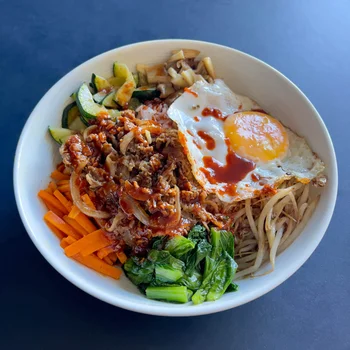
Thin slices of smoky and sweet beef with stir-fried vegetables and a fried egg, all on rice, finished with a drizzle of gochujang sauce.

Active prep: 35 minutesPassive prep: 8 hoursActive cooking: 35 minutesPassive cooking: 10 minutes

Ingredients

Servings

Beef bulgogi

  • 500 grams Sirloin or ribeye steak
  • 1 small Asian pear, grated
  • 1 medium Brown onion, thinly sliced
  • 3 cloves Garlic, grated
  • 3 centimetres Ginger, grated
  • 1 tablespoon Rice wine vinegar (optional)
  • 4 tablespoons Light soy sauce
  • 2 teaspoons Gochujang (optional)
  • 1 tablespoon Sesame oil
  • 2 teaspoons White sugar
  • 1 tablespoon Toasted sesame seeds
  • 2 Spring onions, finely chopped
  • 0.5 teaspoon Ground black pepper
  • Neutral oil

Gochujang sauce

  • 2 tablespoons Gochujang
  • 1 tablespoon Light soy sauce
  • 1 teaspoon Rice wine vinegar
  • 2 teaspoons Sesame oil
  • 1 teaspoon White sugar
  • Water, to loosen

Bibimbap

  • 4 cups Cooked short-grain rice
  • 1 medium Carrot, julienned
  • 1 medium Courgette, sliced
  • 300 grams Oyster mushrooms, roughly chopped
  • 100 grams Spinach
  • 200 grams Beansprouts
  • 4 large Eggs
  • 4 teaspoons Sesame oil
  • Salt, to taste
  • Ground black pepper, to taste
  • 1 clove Garlic, minced

Instructions

Beef bulgogi

  1. Place the steak in the freezer for around 30 minutes to firm up. Slice very thinly and transfer to a bowl.
  2. Add the grated pear, onion, garlic, ginger, spring onions and remaining ingredients. Mix thoroughly and marinate for 8 hours (or overnight).
  3. Heat a large pan over medium-high heat with neutral oil. Fry the marinated beef and onions for 3–5 minutes until cooked through. Set aside.

Gochujang sauce

  1. Combine the sauce ingredients, adding water gradually until you reach a pourable consistency.

Bibimbap

  1. Blanch the spinach for 1 minute in boiling water, remove to cold water then season with salt, sesame oil and minced garlic.
  2. Sauté each remaining vegetable separately in a lightly oiled pan, starting with those that take longer (carrot and courgette). Season lightly with salt and pepper. Set aside once tender.
  3. Fry the eggs with set whites and runny yolks.
  4. Heat stone bowls over medium-low heat for 5–10 minutes until hot but not smoking.
  5. To each bowl, drizzle the sesame oil then add a cup of rice, pressing it down so it makes full contact with the bowl. It should begin to sizzle.
  6. Arrange vegetables and beef bulgogi over the rice. Then top with a fried egg followed by a spoonful of the gochujang sauce all over. Serve immediately.

Helpful notes

Cooking tips

  • Freezing the meat slightly makes it much easier to cut into thin, even slices without the meat bending or tearing.
  • Slicing the meat perpendicular to the direction of the muscle fibres, rather than parallel to them makes each slice more tender. Meat has long muscle fibres that can be tough to chew. Cutting against the grain shortens these muscle fibres.
  • It is important to not overcrowd the pan when cooking the steak as this can cause it to steam rather than sear. This will result in soggy and chewy meat with underdeveloped flavour.
  • Using a dolsot: Although this is traditional and is needed to get that crispy layer of rice, it is not necessary and you can serve the bibimbap in a normal bowl.
  • If you are on a time limit, you can steam or sauté the vegetables all together rather than cooking separately.

Alternative ingredients

  • An alternative to asian pear would be to use red apples (Fuji or Gala apples) or pears (Red Anjou pears). These variations have a similar sweetness and texture that helps to tenderise the steak while marinating.
  • Ribeye is tender and flavourful, making it another popular choice for bulgogi. Its fat content helps keep the meat juicy during the quick cooking process.
  • Use any combination of vegetables you like or have ready in the cupboard. Broccoli and peppers are good options as well.
  • Kimchi, although not included in this recipe, gives a tangy and spicy balance to the otherwise savoury dish.

Storage instructions

Refrigeration: Store as a complete dish or as separate components in an airtight container in the fridge. It can be safely stored for up to 3-4 days. Storing each component separately helps maintain the texture of each one.

Freezing: Store each component separately in airtight containers. The beef bulgogi can be frozen for up to 3 months whereas the rice and vegetables for up to 1 month (although the texture of vegetables may deteriorate). Do not freeze the egg.

Re-heating instructions

If frozen, ensure it has fully defrosted overnight in the fridge before re-heating.

Microwave: To quickly re-heat everything at once, heat on medium power for 2-3 minutes, stirring halfway through to ensure even heating. Adjust the time depending on the microwave's power and portion size.

Stove: Re-heat the beef bulgogi and vegetables separately on the stove over medium heat. Add a little neutral oil to help cook until hot throughout. Re-heat the rice in the microwave.

Nutrition and dietary facts

Per serving:Calories: 823kcal (37%), Protein: 52.9g (88%), Fat: 36.4g (45%), Saturated fat: 11.5g (77%), Carbohydrates: 88g (32%), Sugars: 12g (48%), Fibre: 5.4g (18%)

NOTE: The nutritional information provided for this recipe is an estimate based on ingredients and cooking instructions as described - it is intended for informational purposes only.

Page contents

Related recipes

View all recipes

Featured in meal plans...

No linked meal plans...

View all meal plans