Soft and chewy cookies packed with creamy white chocolate and tangy raspberries.
Share on:
Active prep: 15 minutesPassive prep: 60 minutesPassive cooking: 15 minutes
Join the newsletter
Ingredients
Servings
125 grams Unsalted butter
120 grams White granulated sugar
110 grams Light brown sugar
1 large Egg
1 teaspoon Vanilla extract
220 grams Plain flour
0.5 teaspoon Baking powder
0.25 teaspoon Baking soda
0.25 teaspoon Fine salt
100 grams White chocolate
75 grams Frozen raspberries
Instructions
In a large bowl, beat the room temperature softened butter, white sugar, and light brown sugar together until light and fluffy. Mix in the egg and vanilla extract until fully combined.
In a separate bowl, sift together the plain flour, baking powder, baking soda, and salt. Gradually fold the dry mixture into the wet ingredients to form a soft dough.
Gently fold in the small chunks of white chocolate and the frozen raspberries.
Scoop roughly 1.5 tablespoons of dough per cookie (about 30g each), roll into balls, and place them on lined baking trays, leaving enough space between each.
Allow to rest in the fridge for at least 1 hour (or freeze).
Pre-heat the oven to 180°C and bake for 15-18 minutes (add an extra 2-3 minutes if frozen), or until the edges are golden and the centres look slightly soft.
Allow the cookies to cool on the trays for 5 minutes, then transfer to a wire rack to cool completely.
Helpful notes
Cooking tips
Let the butter to soften to room temperature. This allows for better creaming with sugar, creating tiny air pockets in the dough that help the cookies rise and spread evenly. Cold butter would not blend as smoothly, and melted butter would result in a greasy texture.
Frozen raspberries are ideal because they hold their shape better during mixing and baking. If you were to use fresh raspberries, they could break apart and release excess moisture, which might result in a soggier dough.
Folding the dry ingredients into the wet mixture gently (using a spatula or spoon) ensures you don't overwork the dough. Over-mixing can cause the cookies to become dense and tough, as it develops the gluten in the flour. Folding helps maintain a light texture, especially for cookies where you want a soft, chewy bite.
Chilling the dough in the fridge (1–48 hours) allows the butter to firm up, which prevents cookies from spreading too much, while also giving the flour time to slowly hydrate and deepen the flavour for a chewier texture. Freezing, on the other hand, stops that process because the liquid in the dough turns to ice crystals; it firms the butter completely and pauses hydration, though baking from frozen can produce slightly thicker cookies since the dough stays cold longer in the oven. The best method is to chill the dough first to develop texture and flavour, then scoop and freeze it if you want to store cookies for later.
Remove the cookies from the oven while the centres are still soft, they continue to cook on the baking tray from residual heat. This gives them a chewy, soft texture in the middle, with crisp edges. If you bake until they're fully firm in the centre, the cookies could become too crunchy throughout.
Allowing cookies to cool for a few minutes on the baking tray gives them time to firm up before they are moved. If you try to transfer them too soon, they may break apart, especially if they're soft in the centre. The wire rack allows air to flow completely underneath, preventing the base becoming soggy.
Alternative ingredients
For a slightly nuttier flavour, use an equal amount of almond flavouring instead of vanilla. Be careful to not use too much as the flavour can be overpowering.</li>\n<li>A simple substitute of vegetable oil instead of butter, though it can affect texture, making the cookies a little more tender than butter would.
You can substitute part of the sugar with maple syrup for a more natural sweetener. Adjust the flour to compensate for added liquid.
Other tart berries such as cranberries, blueberries and blackberries can be use with or instead of raspberries.
NOTE: The nutritional information provided for this recipe is an estimate based on ingredients and cooking instructions as described - it is intended for informational purposes only.
Store your cookies in an airtight container to keep them fresh. This helps prevent them from drying out or absorbing any moisture in the air.
Room temperature: The cookies will stay fresh for about 4-5 days. Ensure the container is sealed tightly and keep them in a cool, dry place, away from direct sunlight or heat sources.
Freezing: Place the cooled cookies in a single layer on a baking tray and freeze them for 1-2 hours. Once frozen, transfer them to an airtight container or a freezer-safe bag. They can last up to 3 months in the freezer.
Refrigeration: The fridge can cause cookies to become hard and dry. Cold temperatures can alter the structure of the fats (like butter), making the cookies lose their softness and become overly firm and crumbly.
 Matt Xiaxiang
 Home
Home Recipes
 Meal plans
 Main dishes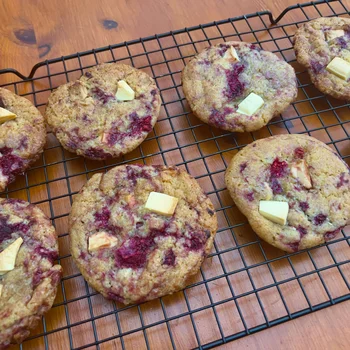
 Pumpkin and dark chocolate cookies
 Chai spiced banana bread with walnuts
 Cinnamon rolls
 Sticky toffee pudding
 Orange curd, almond and cardamom blondies