Pork shoulder ragu

Pork shoulder ragu
Posted: 13/02/2026Updated: 13/02/2026

Braised pork shoulder slow-cooked into a tender ragu with tomatoes and fresh herbs.

Active prep: 20 minutesActive cooking: 40 minutesPassive cooking: 1.5 hours

Ingredients

Servings
  • 600 grams Pork shoulder
  • 1 medium Brown onion
  • 1 large Large carrot
  • 2 Celery stalks
  • 3 cloves Garlic
  • 1 tablespoon Tomato purée
  • 200 millilitres Dry white wine
  • 400 grams Plum tomatoes, canned
  • 250 millilitres Chicken stock
  • 2 Fresh rosemary sprigs
  • 2 Fresh thyme sprigs
  • 4 Fresh sage leaves
  • 60 millilitres Double cream
  • 350 grams Pappardelle (or any other pasta)
  • Parmesan, to finish
  • 2 tablespoons Olive oil
  • Salt, to taste
  • Ground black pepper, to taste

Instructions

  1. Cut the pork into 2–3 inch chunks and pat dry. Season with salt and pepper.
  2. Heat half the olive oil in a large pot over medium-high heat and sear the pork until browned on all sides. Remove and set aside.
  3. Finely dice the onion, carrot and celery.
  4. Lower the heat, add the remaining olive oil, and sauté the onion, carrot, celery, and minced garlic until softened (about 8–10 minutes). Stir in the tomato purée and cook for 2 minutes.
  5. Deglaze the pot with white wine, scraping up any browned bits. Simmer for 2–3 minutes until slightly reduced.
  6. Chop the rosemary, thyme and sage leaves.
  7. Add the plum tomatoes, chicken stock with the rosemary, thyme, and sage. Return the pork to the pot and cover with sauce. Bring to a gentle simmer.
  8. Cover and cook on low heat for 1.5-2 hours, stirring occasionally, until the pork is tender and easy to shred. (Alternatively, cook in a pre-heated oven at 150°C for the same time - only if your pot is ovenproof)
  9. Remove the pork and let it rest for 10 minutes before shredding it.
  10. Uncover and cook the ragu on medium heat for a final 30 minutes, stirring occasionally to prevent it from burning.
  11. Stir the shredded pork back into the sauce along with the double cream. Adjust seasoning with salt and pepper, and cook for another 1-2 minutes.
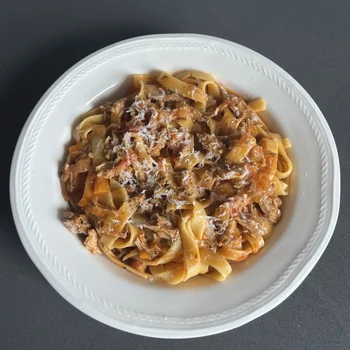
  12. Cook the pappardelle in salted boiling water until al dente. Drain, then toss with the ragu.
  13. Serve topped with freshly grated Parmesan.

Video tutorial

Helpful notes

Cooking tips

  • If you have a whole pork shoulder, cut into smaller sections about 2-3 inches thick. This will help it sear on more surface area.
  • Ensure the pork is well-dried with paper towels before searing for better caramelisation. You're not looking to cook the meat here so only sear for a total of a few minutes. If the pork is crowded, surface moisture cannot evaporate quickly enough and browning stalls. Leave visible space between pieces during searing.
  • After deglazing, simmer until the wine no longer smells alcoholic and has reduced by roughly half. This prevents a sharp acidity in the finished sauce.
  • Keep the heat low and cook slowly to tenderise the pork and allow the flavours to develop. Only take off the lid when stirring occasionally as otherwise too much heat can be lost.
  • Pork shoulder becomes properly shreddable once internal temperature reaches roughly 90–95°C and collagen has converted to gelatin. If the meat doesn't shred easily, it is undercooked, not overcooked.
  • Reducing for longer will concentrate the sweetness naturally. If the tomatoes are still a little sharp, add a pinch of sugar..
  • Save some pasta cooking water to loosen the sauce if it becomes too thick.
  • Stir in the double cream just before serving to keep the sauce silky and avoid curdling.

Alternative ingredients

  • Pork shoulder can be substituted with pork cheek, beef chuck, beef short ribs, veal shoulder, or lamb shoulder for a different main flavour. Adjust the cooking time appropriately.
  • Replace the double cream with mascarpone, crème fraîche, or even full-fat Greek yoghurt for a tangy note.
  • Swap the dry white wine with dry vermouth, chicken stock, or apple cider for a subtle variation in flavour.
  • Fettuccine, tagliatelle, or even rigatoni work well if you can’t find pappardelle.

Storage instructions

Let the ragu cool to room temperature before storing to prevent condensation and maintain quality. Don't freeze the pasta or store the pasta and ragu together pasta as this can ruin the texture.

Refrigeration: Transfer the ragu to an airtight container and store in the fridge for up to 3-4 days.

Freezer: For longer storage, freeze the ragu in airtight containers. It will keep well for up to 3 months.

Re-heating instructions

Defrost the ragu in the fridge overnight, or use the defrost setting on your microwave.

Stove: Re-heat over medium-low heat in a saucepan, stirring occasionally to prevent sticking. Add a splash of chicken stock or pasta water to loosen the sauce if it has thickened too much.

Microwave: Heat in a microwave-safe container, covered, at medium power in 1-minute intervals, stirring between each round until heated through.

Nutrition and dietary facts

Per serving:Calories: 820kcal (36%), Protein: 48g (80%), Fat: 36.9g (46%), Saturated fat: 14g (93%), Carbohydrates: 64.5g (23%), Sugars: 12g (48%), Fibre: 5g (17%)

NOTE: The nutritional information provided for this recipe is an estimate based on ingredients and cooking instructions as described - it is intended for informational purposes only.

Page contents

Related recipes

View all recipes

Featured in meal plans...

No linked meal plans...

View all meal plans