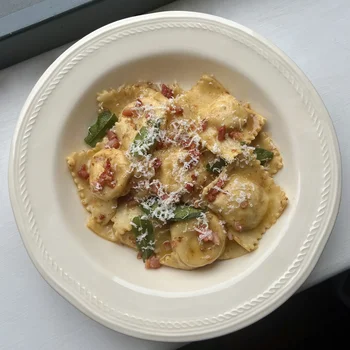
Butternut squash, walnut and ricotta ravioli

Butternut squash, walnut and ricotta ravioli
Posted: 19/01/2026Updated: 19/01/2026

Roasted butternut squash ravioli with ricotta and walnuts, finished in a sage and butter sauce.

Active prep: 60 minutesPassive prep: 40 minutesActive cooking: 15 minutesPassive cooking: 45 minutes

Ingredients

Servings

Pasta dough

  • 300 grams 00 flour
  • 3 large Eggs
  • 0.5 teaspoon Fine salt

Ravioli filling

  • 1 medium Butternut squash (about 1 kg)
  • 1.5 tablespoons Olive oil
  • 1 small Garlic bulb
  • 1 medium Shallot
  • 60 grams Walnuts
  • 60 grams Pecorino Romano
  • 100 grams Ricotta
  • Zest from half a lemon
  • 0.25 teaspoon Ground nutmeg
  • Salt, to taste
  • Ground black pepper, to taste

Ravioli assembly

  • Semolina, for dusting
  • Water, for sealing

Butter and sage sauce

  • 100 grams Pancetta, diced
  • 50 grams Unsalted butter, small cubes
  • 8 Fresh sage leaves
  • Juice from half a lemon
  • Pecorino Romano, to garnish

Instructions

Pasta dough

  1. On a clean work surface, create a mound with the flour and sprinkle with salt. Make a well in the centre.
  2. Crack 2 egg yolks and 1 whole egg into the well. Using a fork, gently beat the eggs, slowly drawing in flour from the edges.
  3. Once it forms a shaggy dough, use your hands to form it into a ball.
  4. Knead until smooth and elastic (8–10 min). Wrap in cling film and rest for 30 minutes at room temperature.

Ravioli filling

  1. Pre-heat the oven to 200°C.
  2. Peel the loose outer papery layers (leave skin on cloves) off the garlic bulb. Slice about 5mm off the top to expose the cloves.
  3. Place bulb on a piece of foil. Drizzle with a little olive oil over the exposed top. Wrap until completely covered.
  4. Half the butternut squash, remove the seeds, score the flesh and season with the remaining olive oil, salt, and black pepper.
  5. Roast the garlic and butternut squash in the oven for 45-60 minutes.
  6. In the meantime, finely dice the shallot and sauté in olive oil until lightly golden (about 6-8 minutes). Set aside and allow to cool.
  7. Lightly toast the walnuts in a dry pan.
  8. Once finished roasting, squeeze the garlic out of skin and scoop out the flesh of the butternut squash. Allow both to cool.
  9. To a blender, add the garlic, butternut squash and shallots, walnuts, pecorino Romano, nutmeg, salt, and black pepper. Blend until the mixture is thick and spoonable. Stir in the ricotta and lemon zest.
  10. Allow to chill while rolling the pasta.

Ravioli assembly

  1. Roll dough into large, thin sheets, about 0.7mm thick (setting 6–7 on a pasta machine).
  2. Place 1 tsp of filling, leaving a gap of about a 4 cm between each.
  3. Brush around the filling with a little water, lay another sheet on top, press it down firmly around each mound to seal and push out any air, then cut into ravioli.
  4. Place the ravioli on a semolina dusted tray, and cover.

Butter and sage sauce

  1. Starting with a cold pan, fry the pancetta until crisp and, set aside.
  2. In the same pan, lightly crisp the sage in the leftover pancetta fat. Remove and set aside.
  3. In a separate pot, cook the ravioli in gently boiling salted water (2–3 minutes, until they float).
  4. Deglaze the pan with a few tablespoons of pasta water. Simmer briefly until a sauce starts to form.
  5. Take the pan off the heat and whisk in cold cubes of butter.
  6. Add the lemon juice to taste.
  7. When the ravioli are ready, transfer straight into the sauce, toss gently, and finish with the pancetta, sage, and pecorino Romano.

Helpful notes

Cooking tips

  • Drain ricotta well: Let it sit in a sieve for 30 minutes to prevent a watery filling.
  • The squash and garlic should be fully cooled and excess moisture allowed to evaporate before blending. A wet filling makes sealing difficult and increases the risk of splitting.
  • Aim for thick and spoonable, not smooth like a purée. Leaving a little texture from the walnuts improves structure and prevents the filling from leaking.
  • Fresh pasta dough dries fast so lay a damp tea towel over rolled sheets while filling/cutting ravioli.
  • When sealing the ravioli, press firmly around filling to push out air bubbles. Trapped air makes them burst in boiling water.
  • Semolina is coarser than flour, so it creates a slightly gritty barrier. This means the pasta doesn’t absorb it as quickly, so the ravioli won’t stick to the tray or each other. Flour becomes gummy in water, unlike semolina which washes off cleanly and helps keep pasta separate as it cooks.
  • Use gently boiling, not aggressively boiling, water. A rolling boil increases the chance of them bursting.
  • Remove the pan from the heat before adding the butter; if the pan is too hot, the butter will split and the sauce won’t emulsify properly..

Alternative ingredients

  • Plain flour can be used instead of 00 flour for the most similar taste. Or strong white as a last resort but will result in a chewier pasta.
  • Mascarpone can be used instead of ricotta. Due to the mascarpone’s richer and creamier texture, use 25% less.
  • Pumpkin, sweet potato or even carrots can be used instead of butternut squash.
  • Pine nuts make a good alternative to walnuts. They are more buttery and delicate than the earthy taste of walnuts.

Storage instructions

Fresh pasta: Wrap tightly in cling film (or a reusable wrap). Store leftovers in the fridge for up to 24 hours. For longer storage, freeze as a flattened sheet; thaw overnight in the fridge before rolling.

Filling: Make ahead and refrigerate in a sealed container for up to 2 days. Don’t freeze.

Uncooked ravioli: Place on a tray dusted generously with semolina (stops sticking). Keep in a single layer, uncovered, in the fridge for up to 4 hours before cooking. Or for freezing, arrange on a semolina-dusted tray, freeze in a single layer until solid, then transfer to a freezer bag/container.

Sauce: Can be stored in the fridge for 1-2 days in an airtight container but this isn’t optimal as the sauce will separate.

Cooked ravioli: Not ideal for storage as the pasta absorbs sauce and goes soft. If you must, refrigerate in an airtight container for 1 day.

Re-heating instructions

Stove: If cooking ravioli from frozen, don’t thaw and boil as if from fresh. Add 1–2 minutes to cooking time. If re-heating the ravioli from the fridge, gently fry in a pan with a splash of water/butter. Re-heat the sauce gently in a pan as well.

Nutrition and dietary facts

Vegetarian

Per serving:Calories: 909kcal (40%), Protein: 28g (47%), Fat: 42.4g (53%), Saturated fat: 17.1g (114%), Carbohydrates: 90g (33%), Sugars: 6.8g (27%), Fibre: 8.4g (28%)

NOTE: The nutritional information provided for this recipe is an estimate based on ingredients and cooking instructions as described - it is intended for informational purposes only.

Page contents

Related recipes

View all recipes

Featured in meal plans...

No linked meal plans...

View all meal plans