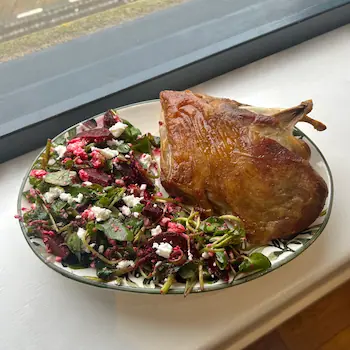
Braised lamb shoulder with white wine, fennel and thyme

Braised lamb shoulder with white wine, fennel and thyme
Posted: 25/03/2026Updated: 25/03/2026

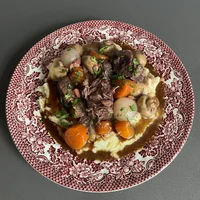
Slow-roasted lamb shoulder, browned then braised with shallots, fennel seeds, lemon, white wine and stock until tender, served with a reduced pan sauce.

Serve with roast potatoes or mashed potatoes alongside green vegetables such as cabbage, green beans or peas. A simple salad with a sharp vinaigrette also works well to cut through the richness.

Active prep: 15 minutesActive cooking: 10 minutesPassive cooking: 3 hours

Ingredients

Servings
  • 2 kilograms Lamb shoulder, bone-in
  • 2 tablespoons Olive oil
  • 2.5 teaspoons Fine sea salt
  • 1.5 teaspoons Ground black pepper
  • 6 Shallots
  • 4 cloves Garlic
  • 1 teaspoon Fennel seeds
  • 1 large Bay leaf
  • 4 Fresh thyme sprigs
  • 150 millilitres Dry white wine
  • 300 millilitres Chicken stock
  • 1 Lemon

Instructions

  1. Heat the oven to 230°C fan (250°C conventional).
  2. Pat the lamb dry, rub all over with olive oil, and season with salt and pepper. Place in a large roasting tin and roast uncovered for 30-35 minutes, turning once if practical, until well browned.
  3. Reduce the oven to 160°C fan (180°C conventional) and remove the lamb to a plate.
  4. Add the shallots (halved lengthways) to the roasting tin and stir them through the rendered fat. Add the whole garlic cloves (lightly crushed) and fennel seeds.
  5. Pour in the white wine, scraping up all the browned bits. Add the stock, bay leaf, thyme and ribbons of lemon peel.
  6. Return the lamb to the tin, fat side up. The liquid should come about one-third to halfway up the meat.
  7. Cover tightly with foil and cook for: Shoulder 3–3.5 hours, Leg: 2.5–3 hours
  8. Remove the foil and return to the oven for 20–30 minutes to re-brown and reduce the sauce slightly.
  9. Optional: Baste the braising liquid over the lamb once during this period.
  10. Rest the lamb for 10 minutes in the braising liquid loosely covered, then remove and rest for another 10 minutes still loosely covered.
  11. Optional: Strain the braising liquid into a small saucepan then simmer for 10-15 minutes until reduced and smooth. Spoon over the lamb when serving.

Video tutorial

Helpful notes

Cooking tips

  • Using the lemon peel (without pith) adds a subtle citrus flavour without the acidity of juice or the concentrated flavour of zest. Lemon juice’s flavour would dull by the end of braising and would also slightly tighten the meat fibres, while zest can be overpowering. Lemon peels provides a gentle, fragrant citrus flavour that complements well.
  • Pat the lamb completely dry before roasting to help browning. Removing surface moisture allows the lamb to brown properly, creating a better flavour through the Maillard reaction. Moisture prevents caramelisation and can leave the exterior grey rather than golden.
  • Brown the lamb well at high heat to form a crust that locks in flavour, adds texture, and develops a richer taste in the braising liquid from the rendered fat.
  • Keep the braising liquid at one-third to halfway up the meat to ensure the meat stays moist and cooks evenly. Fully submerging the meat would result in poached texture rather than roasted.
  • Braise on a low heat for several hours to break down connective tissue, producing tender, pull-apart meat without drying it.
  • Basting the lamb once during the final re-browning stage for extra moisture and a better flavour.
  • Rest the lamb in the braising liquid before carving; this keeps it tender and juicy.

Alternative ingredients

  • A dry white wine works best as it provides acidity without sweetness, which balances the richness of the lamb and braising liquid. Sweet wines may make the sauce too sickly. Examples: Sauvignon Blanc, Pinot Grigio, or unoaked Chardonnay. You can substitute with other white wines, but aim for low sugar. Avoid heavily oaked or sweet wines as they alter the intended flavour profile. Alternative, additional chicken stock can replace it.
  • Fennel seeds can be replaced with caraway seeds or crushed coriander seeds provide a similar aromatic flavour.
  • Shallots can be replaced with brown onions or spring onions.
  • A little white wine vinegar can be used instead of lemon to balance the richness however does not have the citrus flavour.

Storage instructions

Cool the lamb and sauce to room temperature before refrigerating.

Store the lamb and the sauce together in an airtight container for up to 3 days in the fridge or freeze for up to 2 months.

Re-heating instructions

If frozen, thaw in the fridge before reheating.

Oven: Reheat the meat and sauce gently in the oven at 160°C fan (180°C conventional), covered with foil to retain moisture, for 20–30 minutes.

Stove: Reheat the sauce in a saucepan over low heat, adding a little stock or water to loosen it.
Nutrition and dietary facts

Dairy-free, Gluten-free

Per serving:Calories: 462kcal (21%), Protein: 38.3g (64%), Fat: 30.8g (39%), Saturated fat: 13g (87%), Carbohydrates: 3g (1%), Sugars: 1g (4%), Fibre: 0.5g (2%)

NOTE: The nutritional information provided for this recipe is an estimate based on ingredients and cooking instructions as described - it is intended for informational purposes only.

Page contents

Related recipes

View all recipes

Featured in meal plans...

No linked meal plans...

View all meal plans